
Why do most loyalty programs in the Philippines end up as forgotten plastic cards in a drawer or unread emails in a spam folder? Despite more than 90% of companies having some form of loyalty initiative, many fail to achieve their primary goal of keeping customers coming back.
Loyalty program mistakes are rarely caused by discounts being too shallow. The problem begins when businesses treat loyalty as a transactional bribe rather than a long-term relationship.
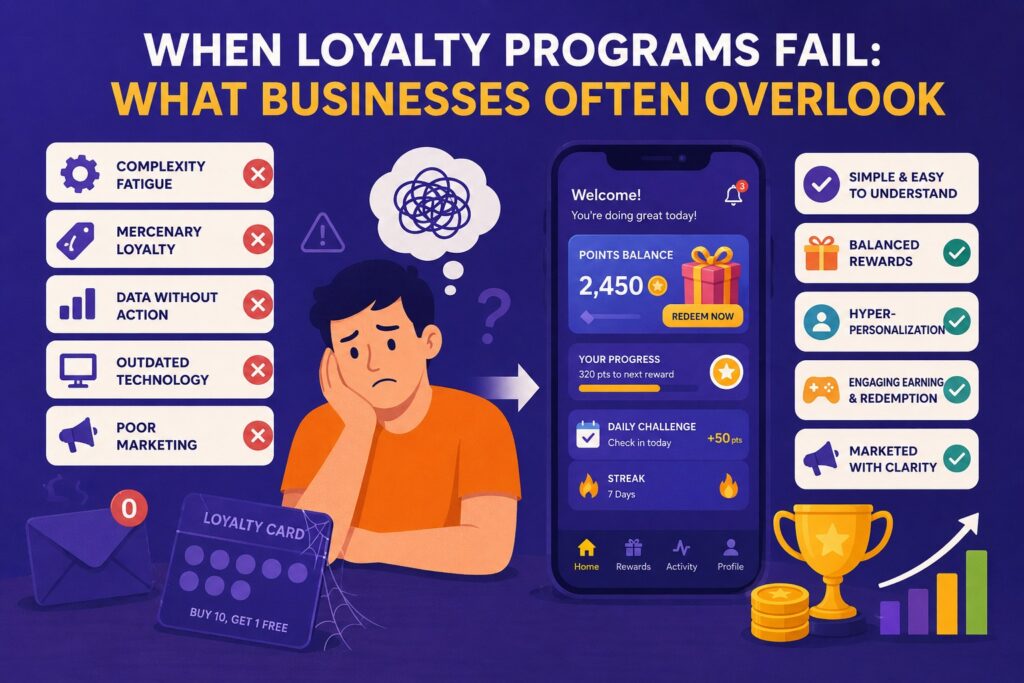
Common Loyalty Mistakes Businesses Make
An online loyalty program can be a powerful driver of customer retention, but it is only as effective as its implementation. If a brand is not careful, many hidden frictions can alienate customers and stifle return on investment (ROI):
1. Complexity Fatigue
Filipinos prefer straightforward loyalty mechanics and may abandon programs that require too much effort to understand, such as complex points systems, obscure rules, or high redemption thresholds. Complexity is the silent killer of engagement, and customers may opt out if the friction of participating outweighs the benefit.
2. Mercenary Loyalty
Many programs focus exclusively on mercenary loyalty, where customers are only loyal because they businesses “pay them”. Mercenary loyalty often includes offering generic discounts and coupons.
While these drive short-term sales, mercenary loyalty does not build brand affinity. If a competitor offers a bigger discount, “loyal” customers can easily make the switch.
3. Data Without Action
Companies are great at collecting data but often terrible at using it. In fact, approximately 55% of data collected by companies globally goes unused or never analyzed.
In the case of loyalty, this translates to misunderstandings and a complete lack of personalization. Sending a vegan customer a discount coupon for a steakhouse indicates that the company is not paying attention. Moreover, generic spray-and-pay messaging makes members feel undervalued.
4. Outdated Technology
Several companies in the Philippines still rely on outdated technology for their online programs, including loyalty platforms. This results in siloed data, which fragments customer data across disconnected systems, ultimately preventing effective personalization efforts. Additionally, obsolete systems often create clunky, slow loyalty apps that may frustrate customers.
5. Poor Marketing
A loyalty program is not a “set it and forget it” tool. Without consistent marketing, benefits stay hidden, and members disengage. If customers don’t see the value regularly, they will forget that it exists.
How to Resolve Loyalty Errors
Fixing a rewards app focuses on changing existing mindsets. Businesses must shift their strategy from getting data to giving value to transform a failing program into a thriving loyalty machine.
1. Simplify Everything
The best loyalty programs do not have complicated reward redemption processes or paragraphs of rules; the most successful platforms are simple, user-friendly, and can be explained fully in one sentence. For example, use a basic “Spend X, Get Y” mechanic or use a tiered system that shows progress visually.
2. Balance Hard and Soft Rewards
To keep loyalty programs from becoming monotonous, brands should consider offering both financial rewards and experiential ones. A balanced blend of perks, such as members-only events and birthday coupons, creates a deep emotional bond that a simple 10% off discount can’t replicate.
3. Hyper-Personalization
Hyper-personalization is the key to creating a powerful loyalty program in the Philippines. Consider using data to create segments of one, and use purchase history to suggest products customers may actually like. By catering to the specific wants of a consumer, brands can easily tap into their emotions and form stronger, long-term relationships.
4. Make Earning and Redeeming Interesting
Many loyalty programs operate on a default system: customers purchase a certain amount, earn points, and redeem them once they reach the threshold. While this straightforward mechanic works, customers may get bored over time.
To retain customer interest and encourage them to keep spending, consider:
- Gamification – adding elements of play, such as levels and badges, can make earning and redeeming more fun.
- Referral Programs – Turn customers into brand advocates while they earn additional points.
- CSR Donations – Align with customer values for better emotional loyalty.
5. Market with Clarity
Marketing campaigns should be consistent and highlight clear benefits across multiple touchpoints. This benefit-driven messaging ensures the program feels worth joining and keeps customers engaged long after sign-up.
Additionally, if employees are not excited about the app or find the program difficult to use, they may not promote it. Teams must be trained to see the program as a tool to help the customer, not a chore to complete.
Turn Loyalty Blues Into Strategic Wins With Buzzebees
Loyalty is not something that your business can buy; it’s something that you earn. By understanding what customers truly want in a rewards app and removing the friction across all touchpoints, you can turn a failing loyalty platform into a powerful growth engine.
At Buzzebees, we provide powerful end-to-end loyalty and engagement solutions that cater to Philippine enterprises and their customers. Designed for maximum long-term retention and growth, our platform ensures consistent, personalized engagement.
To learn more about how we can improve your loyalty game, email analyn.b@buzzebees.com or visit our official website.